


STATION #3
The new Boulder Fire Station No. 3 replaces an outdated facility and provides a modern, resilient home for Boulder Fire-Rescue operations. The 28,000-sf station consolidates apparatus bays, living quarters, and administrative spaces into a two-story facility designed to improve emergency response times and support the city’s growing service demands. The structural system uses composite steel framing with a concrete slab on metal deck, providing the durability and flexibility required for an essential facility expected to serve the community for decades.
Date: 2024
Location: Boulder, Colorado
Architect: Davis Partnership
Contractor: Mark Young Construction
Project Type: Civic
Square Footage: 28,000
Construction Cost: $21 Million
Services Provided:
Structural Engineering
Embodied Carbon Consulting
BOULDER FIRE
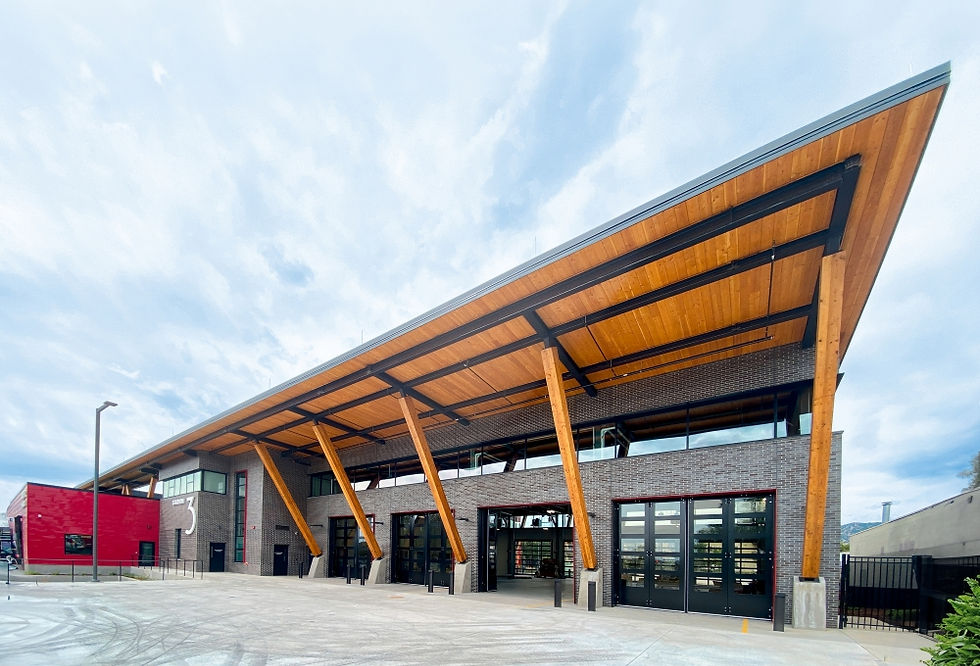

A defining aspect of the project is the reuse of structural steel salvaged from the deconstruction of the former Boulder Community Hospital. KL&A led structural engineering efforts for both the hospital deconstruction and the new station, helping catalog, test, and prepare hundreds of recovered members for reuse. From this stockpile, 89 salvaged wide-flange steel members were incorporated into the fire station structure, including framing at the apparatus bay and roof mechanical screen.


RECOGNITION
ENR Mountain States — Best Project, Government/Public Building
AISC IDEAS Awards — Excellence in Sustainable Design and Construction
Fire Industry Education and Resource Organization (FIERO) Fire Facilities Design Awards — Gold Honor Award
Fire Industry Education and Resource Organization (FIERO) Fire Facilities Design Awards — Health & Wellness Award
By integrating reclaimed structural steel directly into the building’s framing, the project demonstrates a practical model for circular construction and reduced embodied carbon. The approach kept valuable materials within the local community while significantly lowering the environmental impact associated with manufacturing new steel. The visible structural elements also highlight the story of reuse, making the building itself a demonstration of how thoughtful engineering and collaboration can transform salvaged materials into a durable new civic facility.